Engoo
Republished on (Originally released on )

Engoo Blog
![How to Answer "How Are You?" Like a Native English Speaker [Updated]](https://assets.blog.engoo.com/wp-content/uploads/sites/9/2021/06/29025528/how_are_you_respond_1-1024x683.jpg "How to Answer \"How Are You?\" Like a Native English Speaker [Updated]")
“How are you?”
This simple question is the start of many English conversations, but it also confuses many English language learners.
We know because our students often ask us about the best way to respond to it.
Actually, there’s more than one way to answer this question. In this post, we’ll share some popular responses to “How are you?” as well as some options that are a bit more interesting.
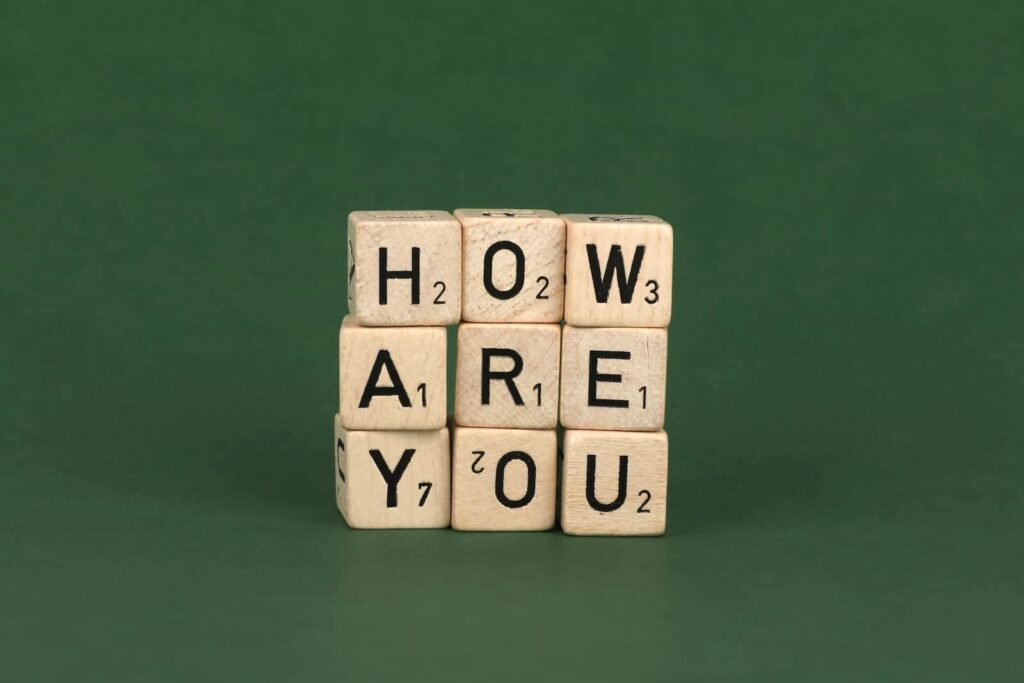
A lot of people reply to “How are you?” by simply repeating the question: “Hi. How are you?” Yes, this is normal!
Unless you’re talking to a friend, “How are you?” is often just a way to greet someone, so think of it as a longer way to say “Hello.”
This is very similar to the way people use the more casual phrase "What's up?"
Your English courses weren’t wrong when they taught you to respond with “I’m fine"! Neutral expressions like this are some of the most popular responses to “How are you?”
One thing to know is that it's common for people to respond with this phrase even if they're not fine. Again, if you're talking with a close friend, it's natural to tell them specifically how you're feeling — either good or bad.
But for strangers and for most small talk, "I'm fine" is a simpler and easier response that nearly always works, so it's a good one to remember!
Below are some more popular English phrases that are similar to “I’m fine.”
"I'm well" sounds more formal than "I'm good."
If you fall down, someone will probably ask you, “Are you OK?” or “Are you alright?” If you’re not hurt, your response would be “I’m OK / alright.”
You can also use the phrase “I’m doing …” with an adverb to say how you are. This has a slightly more casual feeling.

Another way to respond positively is to say that you’re “not bad” or “not too bad.” It basically means "Nothing is wrong."
This is a very casual way to say that you're OK. "Shabby" is an adjective that means "in poor condition," so if you're not too shabby, you're doing well.
An alternative to "Not too bad" is “Can’t complain” (short for "I can't complain.") After all, if your life isn’t too bad, you can’t really complain about it! For example:
“Pretty good” is a response with a more positive nuance.
If your life has not changed much, it’s the “same old” life. If asked “How are you?” you could respond:

Adding some detail to a neutral response is a good way to sound friendlier without making the conversation longer than necessary. Here are some ways to do that:
You can add some detail using the word “just.” For example:
These responses are all a bit casual, so they're not the best choices for professional settings.
It’s common to share bad news before good news in English, so if people share something negative, they will often add something positive at the end.
*"Hang in there" is a casual phrase that refers to getting through a difficult situation.
Now that you know some common phrases to use at the start of an English conversation, it's time to practice what you've learned! Book a one-on-one lesson with an Engoo tutor and try using them naturally.
Engoo lessons are just 25 minutes and our tutors are available 24 hours a day to help you. Give it a try!