

Dungeons & Dragons: An Adventurous Way to Improve Your English [Updated]
![Dungeons & Dragons: An Adventurous Way to Improve Your English [Updated]](https://assets.blog.engoo.com/wp-content/uploads/sites/9/2023/06/20081544/dnd_cover-1024x590.jpg "Dungeons & Dragons: An Adventurous Way to Improve Your English [Updated]")
Do you like fantasy stories full of adventure and unique characters? If so, you may enjoy the world of Dungeons & Dragons.
Dungeons & Dragons (or “D&D” for short) began as a game before expanding into films, cartoons and more.
This article will introduce the basics of D&D and look at why it’s a great game for English learners. We’ll also explain some common vocabulary that you can use while playing. Let’s begin!
What Is Dungeons & Dragons?
A dungeon is an underground cave, usually under a castle. In fiction stories, they're often used as prisons and are filled with dangerous people or even dangerous creatures!
So a game called "Dungeons & Dragons" should make you think of fantasy worlds with heroic characters and magical beings like you would find in a storybook.
Dungeons & Dragons is considered the first modern fantasy role-playing game. It was created by American game designers Gary Gygax and Dave Arneson, and was first released in 1974.
Unlike video games and board games that use images, D&D players must use their imaginations. Players create their own characters and use them to fight monsters and find treasure. Because there is a lot of freedom in how to play, no two games are the same!
How Do You Play It?

All you need to play D&D is a book of the rules, a sheet of paper, and special dice players roll to decide various points of the game. However, you can also use additional items, such as figures to represent your characters.
Once you have these, you need a group to play with. One person in the group will be the Dungeon Master (or "DM"), who guides the general flow of the game.
Since D&D was created in the 1970s, it was originally designed to be played by people sitting together around a table — that's why games like these are sometimes called "tabletop games." But these days, you can also find and play with others online.
Why Should You Play It?
English learners can benefit from D&D because playing tests many different language skills. Storytelling is a big part of the game, so you'll need to listen to the Dungeon Master and discuss strategies with your partners.
Additionally, you'll often need to check the rule book and the notes you've made about your characters and your adventure. That means you'll be doing lots of reading and writing as well as listening.
So if you're studying English, this is a great way to practice several skills while also having some fun with friends.
Useful Words and Expressions for D&D
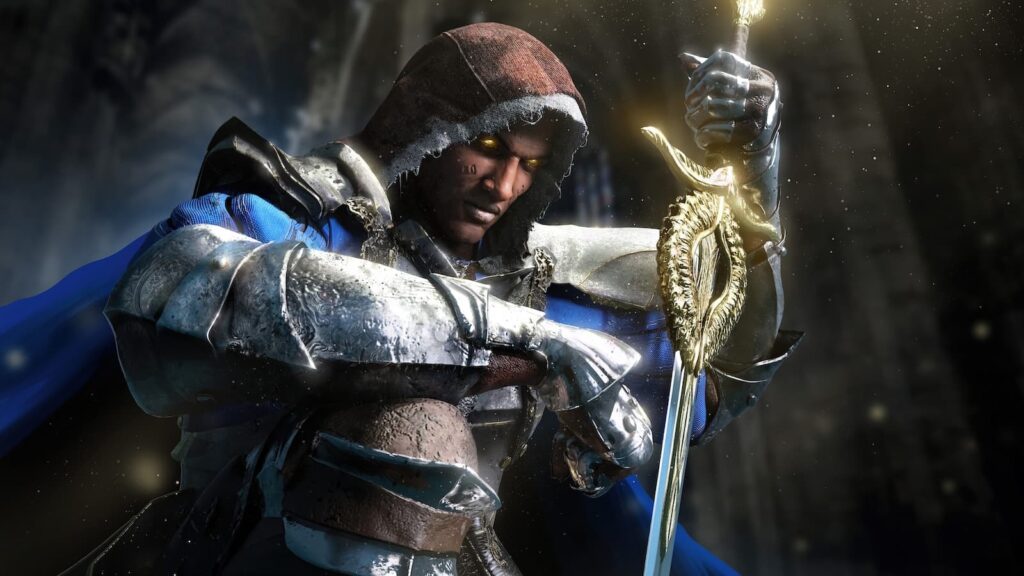
To play D&D, you'll need to learn some special vocabulary. Some of these terms are used in other games, and some are even useful in daily conversations. Here is a list of just a few of them:
Class - A type of character. Each class, such as Fighters, Wizards or Monks, has its own strengths and weaknesses.
Campaign - A series of connected adventures that are part of a larger story. Outside of D&D, "campaign" can refer to a major operation that will take time to complete, such as a political campaign or a military campaign.
NPC - Non-Player Character. NPCs are characters played by the Dungeon Master. This is also a common term in video games.
HP - Hit Points. These measure the amount of health characters have. When a character loses all of their HP, they die.
XP - Experience Points. You gain these as you complete adventures and defeat enemies.
Module - A book with a complete story or adventure that has been prepared for players in advance.
LFG - Looking For a Group. This abbreviation is used when looking for others to play with online.
OP - Overpowered. "OP" describes someone or something that is so strong that it's unfair to other players.
Encounter - "Encounters" are situations in which players must fight enemies, talk to other characters or solve a problem. This is a common word that is both a verb ("to meet") and a noun ("meeting").
Ruling - A decision by the Dungeon Master about what is allowed and what is not. This word is also used in law for a judge's decision in a legal battle.
Backstory - A character's history. In other words, this is what a character has done or what has happened to them before the start of the game. People also use this word to talk about characters in films, books and other kinds of games.
Fluff - Unnecessary details, or things that do not affect the actual game. "Fluff" has a similar use in everyday English, though the nuance is a bit more negative.
Downtime - The time between adventures. Outside of D&D, it refers to a rest period between activities.
Wrap-up
We hope this article has helped to introduce you to the interesting fantasy world of Dungeons & Dragons. It may seem challenging at first, but it's a fun and unique way to improve many of your English skills in a casual environment.
If you'd like to see a real-world example, check out this article from Engoo's Daily News service about students at a university in Chicago who learn through play.